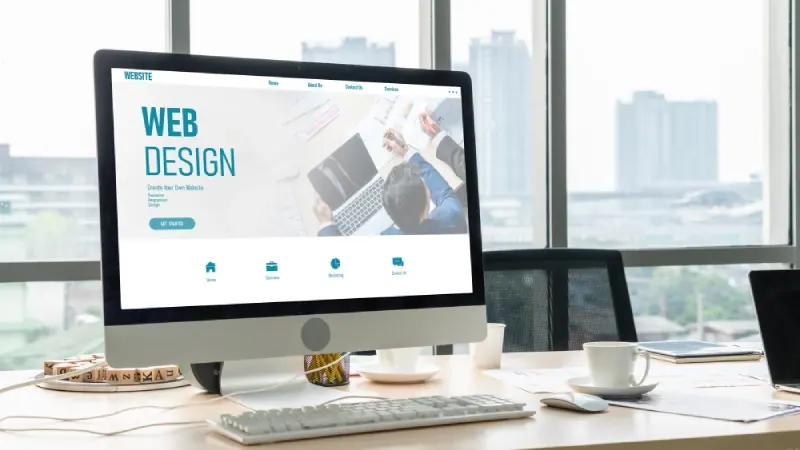
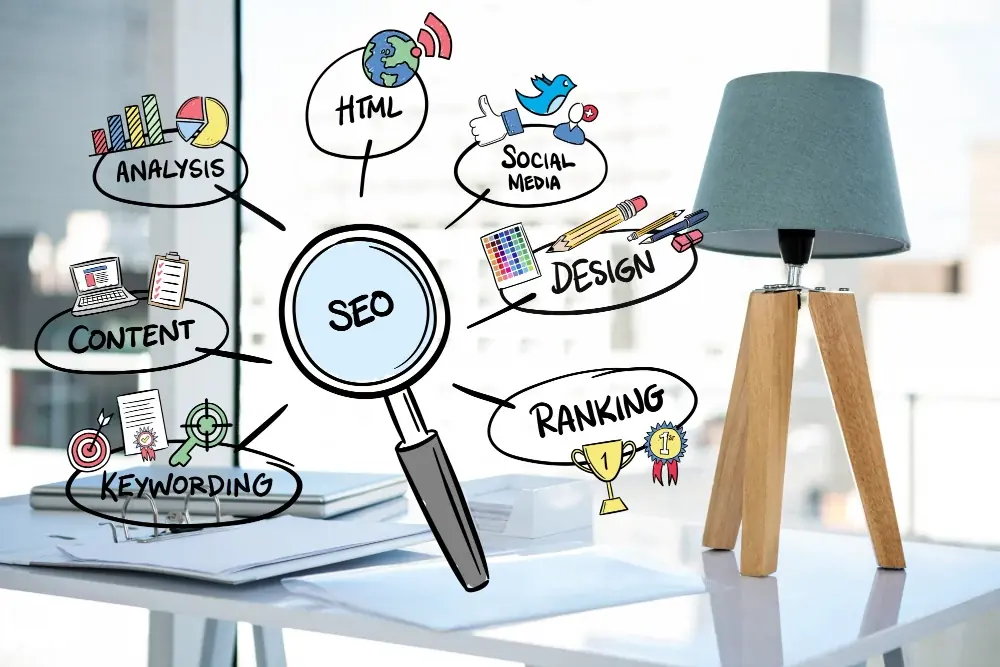
Imagine a beautifully designed shop on a busy street with no sign and no address. People might admire it, but they won't know what it sells or how to find it again. A website designed without SEO in mind is much the same. The best results come when design and search optimisation are planned together from the start.
Structure: how pages are organised
A clear site structure helps visitors and search engines alike. Each important service or product should have its own page, grouped logically and reachable within a few clicks of the homepage. Descriptive URLs (/services/web-development) and breadcrumb navigation tell both users and search engines where they are.
Speed: design choices affect load time
Large hero videos, heavy sliders, multiple font families and unoptimised images all slow a page down — and speed affects rankings. Modern design can be visually striking without being heavy: compressed images, a single variable font and CSS instead of JavaScript for effects go a long way.
Mobile-first design
Google primarily uses the mobile version of a site for ranking. If your mobile layout hides content, makes text too small or puts buttons too close together, it affects both users and search performance. Designing mobile-first ensures the most important content and actions work on every screen.
Content layout and headings
Search engines rely on headings to understand a page's topics. One main heading (H1) that states what the page is about, with logical subheadings beneath it, helps both scanning readers and crawlers. Avoid putting important text inside images, where it can't be read by search engines or screen readers.
Internal links
Design determines how pages link to one another. Navigation menus, related-service links, footer links and in-text links all spread authority across your site and help search engines discover pages. A blog post about mobile apps should link to your mobile app service page, and vice versa.
Accessibility and SEO overlap
Many accessibility practices also help SEO: descriptive alt text on images, proper heading order, meaningful link text instead of "click here", and readable colour contrast. An accessible site is easier for everyone — and every crawler — to understand.
Engagement signals
A well-designed page keeps visitors reading and exploring. Clear calls to action, readable typography and logical next steps reduce people bouncing straight back to search results.
Redesigning without losing rankings
Redesigns are a common cause of sudden traffic drops. To avoid this:
- Keep existing URLs where possible, or set up 301 redirects from old to new.
- Carry over page titles, meta descriptions and valuable content.
- Submit an updated sitemap in Google Search Console.
- Monitor rankings and crawl errors closely after launch.
Design and SEO under one roof
When the same team handles design, development and SEO, these decisions get made together rather than fixed afterwards. Our web development and SEO teams work side by side for exactly that reason.